
The shape of it
A typical term is 15–16 credits: two or three lecture courses with weekly problem sets, one or two courses with a three-hour lab, a math or science course, and often a project or design course that meets once but eats evenings. The credit count understates the load — the labs and the project are where the hours go.
A lab day
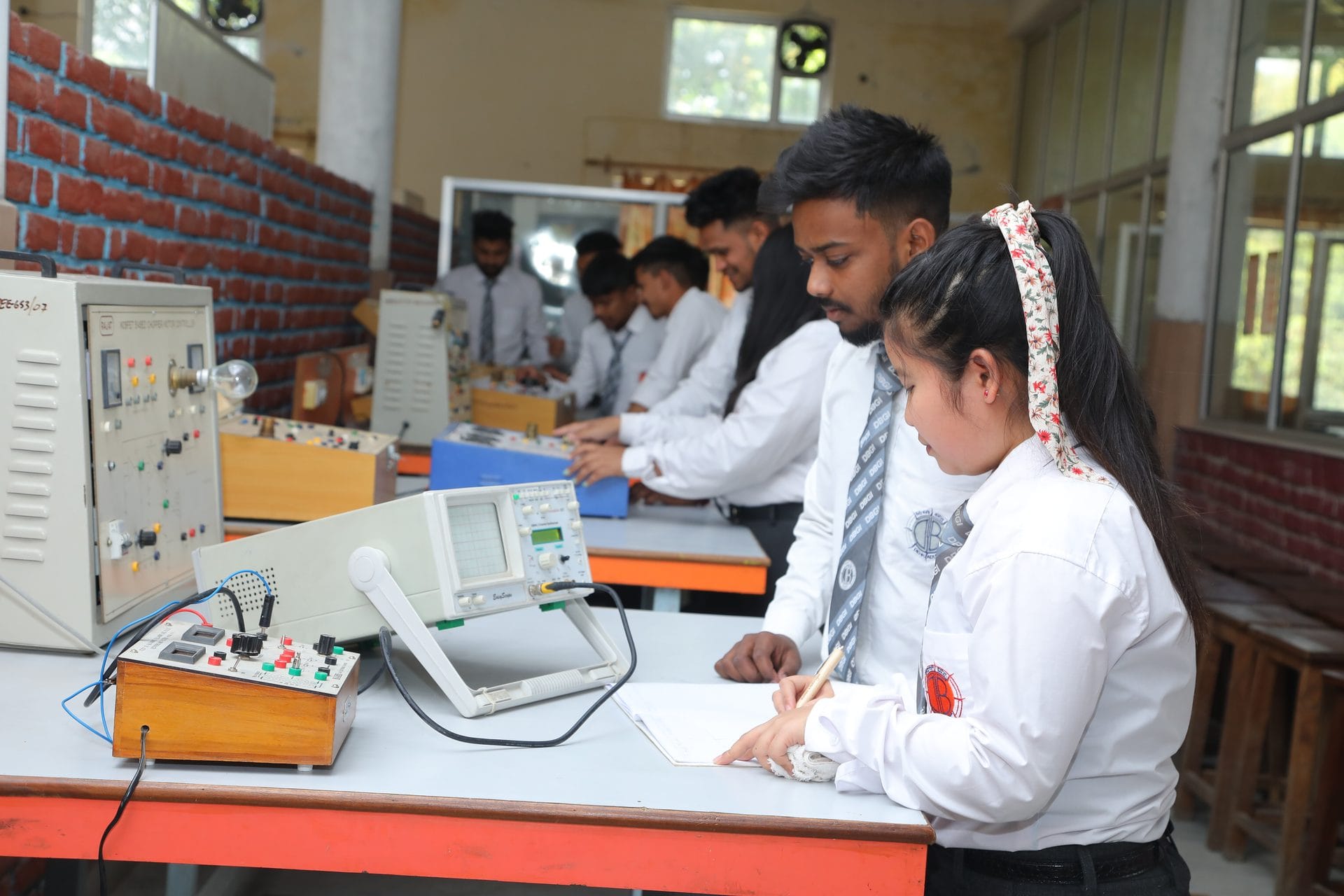
A lab is not a class you can skim before. You come having read the procedure, you spend three hours collecting data with a partner, and then the real work — the analysis and the written report — happens over the next several days. Falling a week behind on lab reports is the classic way an otherwise-fine student loses a term.
Problem sets
Weekly, due at the start of class, and the way you actually learn the material — the lecture shows you the method, the problem set is where it sticks. Start them early enough to get stuck, bring the stuck parts to office hours or a study group, and do not copy: the exam is the problem set with the numbers changed.
The project team
By sophomore year you are on a team building something to a spec — a circuit, a mechanism, a small structure, a piece of code that has to work. It meets on paper once a week and in practice whenever the build needs it. Divide the work into checkable pieces with owners and internal deadlines, or it becomes an all-nighter before the demo.
Where the time comes from
Protect two unbroken hours a day for problem sets and analysis, treat lab-report writing as a scheduled task not a someday task, and use the between-class gaps in a building lounge instead of going home. A part-time job around 10–12 hours fits; 25 hours plus this load does not, for most people.
The rhythm of a term
Weeks 1–3 feel manageable, week 4 is where a hard course bites, weeks 5–7 bring the first exams and next-term registration at once, weeks 8–10 are the drop-with-"W" window if the load was misjudged, and weeks 11–15 are project deadlines stacking into finals. Knowing the rhythm lets you plan for the crunch instead of discovering it.
Fictional information
UW–Porter Falls is a work of parody. Every office, person, building, phone number and statistic on this page is invented; nothing here describes a real institution or a service you can actually contact.