
About this address
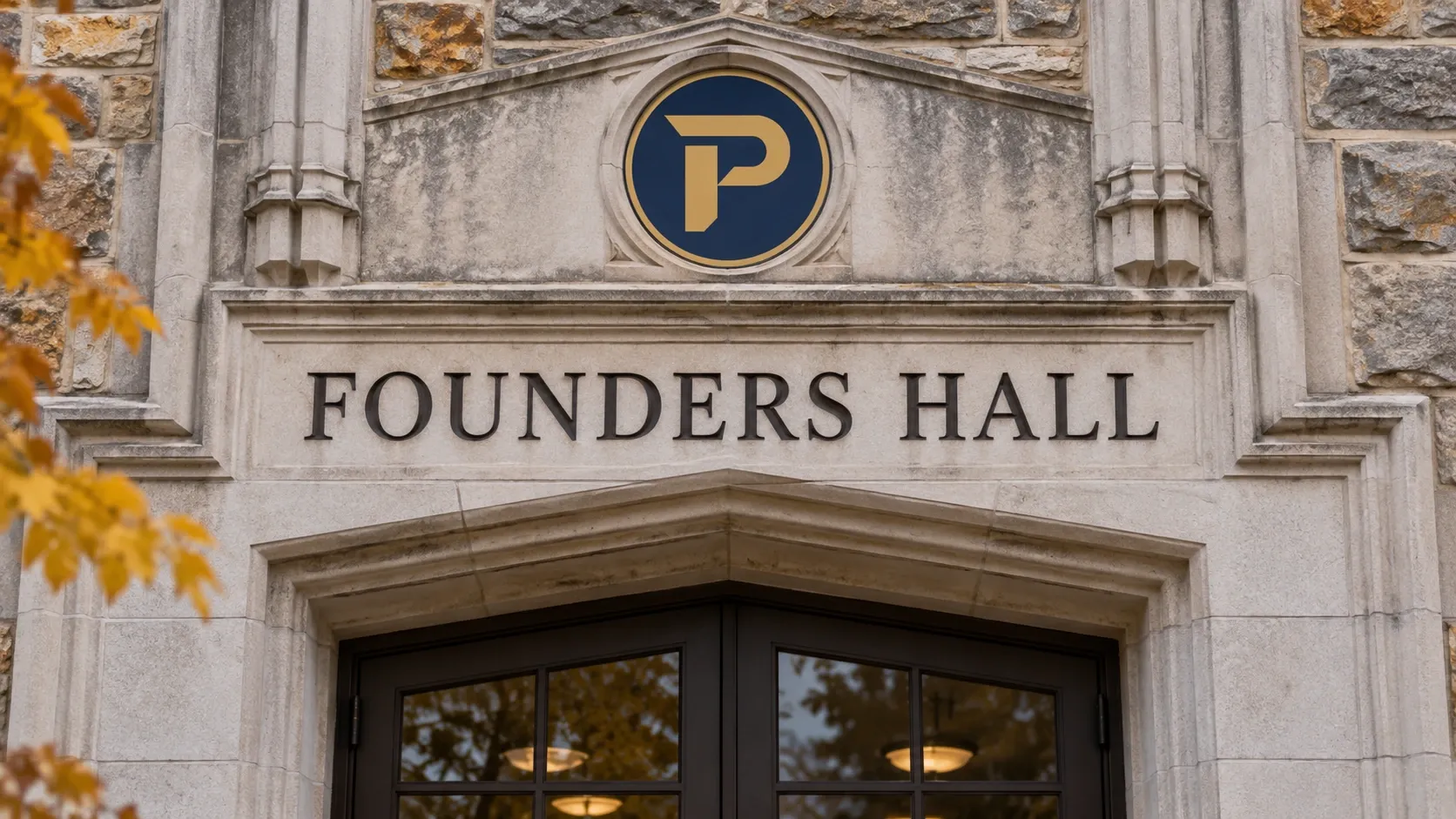
The chancellor gives a State of the University address each September. This year about 600 people attended in the high bay of Founders Hall, the last big event there before renovation work moves indoors. The text below is as prepared; the recording on MyPorter includes a few departures, including the one about the forklift. Data cited in the speech is from the fall 2026 fact book and the FY2027 budget; the chancellor’s short cover note is in the message archive, and her standing priorities are on the Office of the Chancellor page.
Where we stand
Good afternoon. Thank you for coming, and thank you to the crew from Facilities who moved a forty-foot test frame this morning so you would have somewhere to sit. Duane tells me it goes back on Monday.
I’ll start with the number everyone already knows. This fall, 8,412 students are enrolled at Porter, the most in nine years and six percent more than a year ago. Two thousand one hundred and ten of them are new first-year students. Six hundred eighty-two transferred in, many through agreements with the technical colleges that send us people who already know which end of a wrench to hold.
I want to be careful with that number, because enrollment is not the point. It is a measure of whether people think what we do is worth their time and money. This year more of them did. Our job is to make sure they are right.
What we built this year
Last year we conferred 2,516 degrees, more than in any year in our history. Eighty-three percent of last year’s first-year students came back this fall. Our faculty brought in $9.1 million in outside research funding, a record, and about sixty undergraduates were paid to work on those projects.
This month the regional accreditor reaffirmed us through 2036 with no findings. The visiting team singled out two things: an assessment process that actually changes courses, and an advising model that gives every student a plan. Neither of those happened by accident. They are years of committee work that nobody thanks you for, so I will: thank you.
We signed a ten-year workforce agreement with three regional manufacturers and a ten-year rural health agreement with Porter County Health. We won a $2.4 million federal grant for the advanced manufacturing and robotics lab, which opens in fall 2027. And next summer this building, Founders Hall, gets the first phase of a $15 million renovation, which it has been asking for since roughly 1958.
What is not working yet
Now the part of the speech that does not go in the viewbook.
Our career-outcomes rate for the class of 2025 was 91 percent. That is good, and it is down from 94 the year before, and our own target is 95. Some of the drop is better counting. Some of it is not, and we will publish it program by program so nobody has to guess which.
First-generation students now graduate within two points of everyone else, which is the best news in this speech. But in the first year they still come back at a rate 4.1 points lower than their classmates. We said we would cut that gap to under three. We have not yet.
And the accreditors noticed what many of you have told me for two years: some of our most popular programs are running sections that are too big. Growth is only good news if the class you sit in still works.
Money, honestly
Our budget this year is $214.6 million. The state pays a little under a quarter of it. Fifteen years ago it paid about a third. The Regents held resident tuition flat for the second year in a row, which I supported, because the families we serve noticed. That means every new nursing section and every new cybersecurity instructor is paid for by growth, by reallocation, or by the state budget request we submit this winter. I will be in front of legislators more this year than I would like, and I will be bringing students, because they are more persuasive than I am.
We also carry about $41 million in deferred maintenance. That is a polite phrase for roofs. The “Built for Work” campaign is at $29.6 million of its $42 million goal, and every dollar of it goes to students, labs or the library — not to roofs, which is why I keep talking about the state.
The year ahead
Four commitments for this year, the same four priorities as our strategic plan, with numbers attached so you can hold me to them:
- Applied learning: pay for more co-ops and research placements, so cost is never the reason a student skips one.
- Career outcomes: get back to 95 percent, and report it by program.
- Equity: get the first-year retention gap under three points.
- Regional partnership: 240 employer-partnered capstones, up from 212.
Progress on every one of those will be posted on the strategic plan dashboard, including the ones that go badly.
This is also Dr. Bjorn Halvorsen’s last fall as provost. Bjorn is teaching Statics again this semester, because of course he is. He has signed more curriculum forms than anyone in Porter’s history. Please find him at Millrace Week and buy him a coffee. In January we welcome a new provost, and I ask you to give them the same patience you gave me.
Closing
When this school opened in 1893, it had nineteen students and one idea: that working with your hands and working with your mind are the same work. We still believe that, and so do 8,412 students who chose this place on purpose.
So let’s give them a year worth the choice. Thank you. Go Ironclads. And please don’t touch the test frame on your way out.
Fictional information
UW–Porter Falls is a work of parody. Chancellor Vandehey, this address, its audience and every figure in it are invented; no real university leader gave this speech, and there is no test frame to avoid.