
Community · February 19, 2026
City and University Will Share a Brine Plant, Aiming to Cut Road Salt Use by a Third
A ten-year agreement puts a $310,000 brine-making facility in the campus facilities yard, after student river data tracked rising chloride in local creeks.
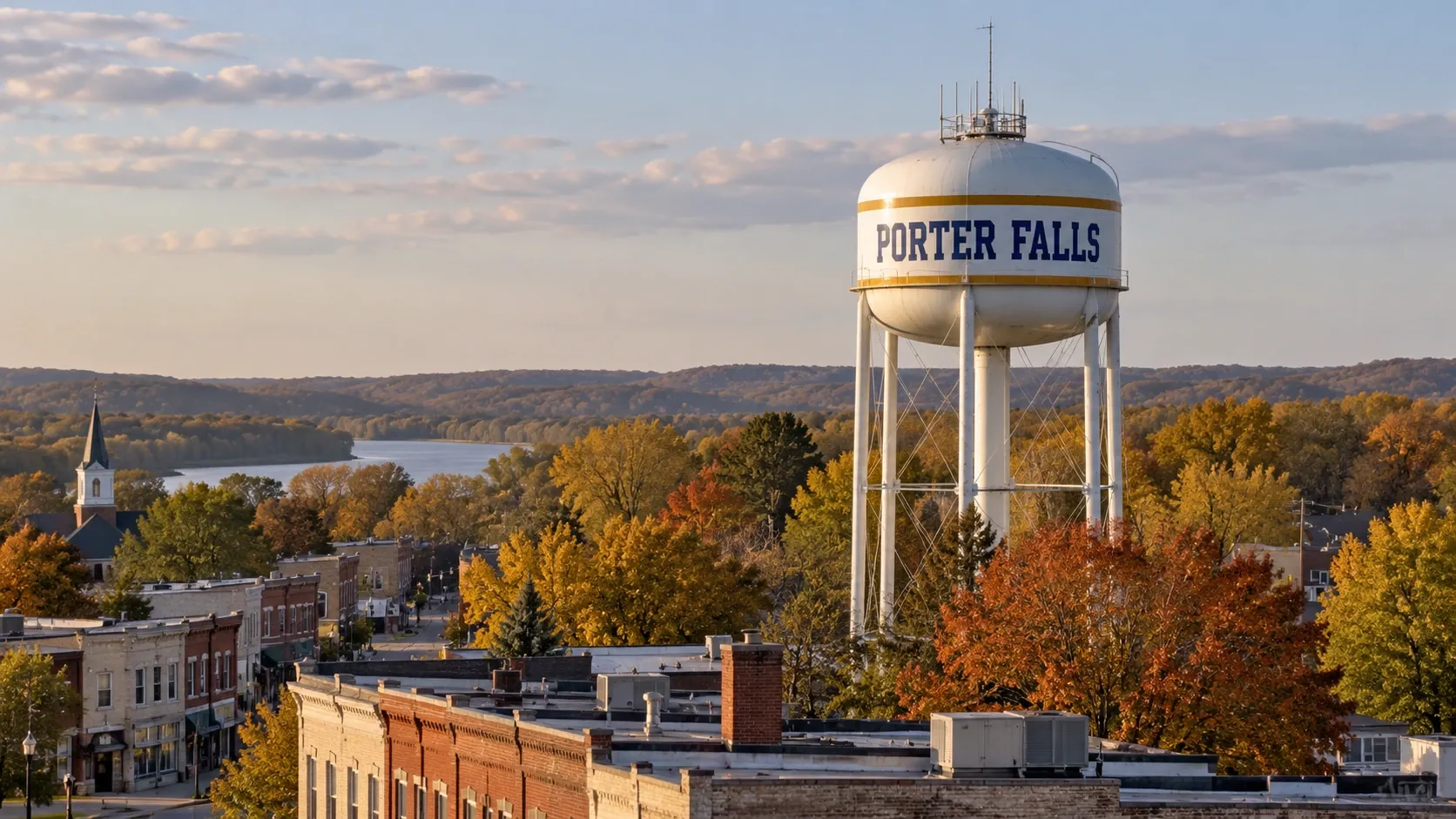
The Porter Falls city council and the university signed a ten-year agreement on Tuesday to build and share a brine-making plant. Both will use it to treat roads, parking lots and sidewalks with a liquid salt solution before storms instead of spreading rock salt afterward. The plant will go in the university’s facilities yard off East Founders Drive and should be running by next November.
Brine laid down a few hours before snow keeps ice from bonding to pavement, so plows can scrape a road clean and use much less salt afterward. Cities that switch typically cut rock-salt use by 25 to 40 percent. Porter Falls spread about 2,900 tons of rock salt last winter, and the campus spread another 410.
| Item | Detail |
|---|---|
| Capital cost | $310,000 (city 60%, university 40%) |
| Capacity | About 6,000 gallons an hour, two 10,000-gallon storage tanks |
| Operated by | University Facilities, with city Public Works drivers loading at any hour |
| Target | One-third less rock salt combined by winter 2028–29 |
The case for the plant came in large part from students. The Riverwatch network’s road-salt study, run by environmental science students since 2023, has measured winter chloride levels in two of the five tributaries it samples that are above the level considered harmful to aquatic life during snowmelt. One of those creeks runs under three city streets and the campus’s largest parking lot. The data is summarized on the river and Millrace ecology page.
“Salt doesn’t go away. It goes into the creek and then the river and then it stays there. The students showed us exactly where it was going. After that it was a pretty short conversation.”
— Ray Okonski, Porter Falls Public Works Director
Duane Kolsrud, the university’s director of Facilities, said the shared site made sense because the campus yard already has a heated garage, a three-phase power supply and a staff on duty around the clock in winter. “We’re up at 1 a.m. anyway,” he said.
Students will keep measuring chloride at the same stations so both partners can see whether the plant is working. A civil engineering capstone team will design the loading pad. The agreement came out of the city-campus town–gown council. Organizations interested in similar projects can start with community partnerships, and campus sustainability goals are described on the sustainability page.
Contact: Office of University Communications, news@uwporterfalls.edu
Fictional information
UW–Porter Falls is a work of parody. The brine plant, the agreement, the costs, the salt tonnages and the city official quoted are invented.