
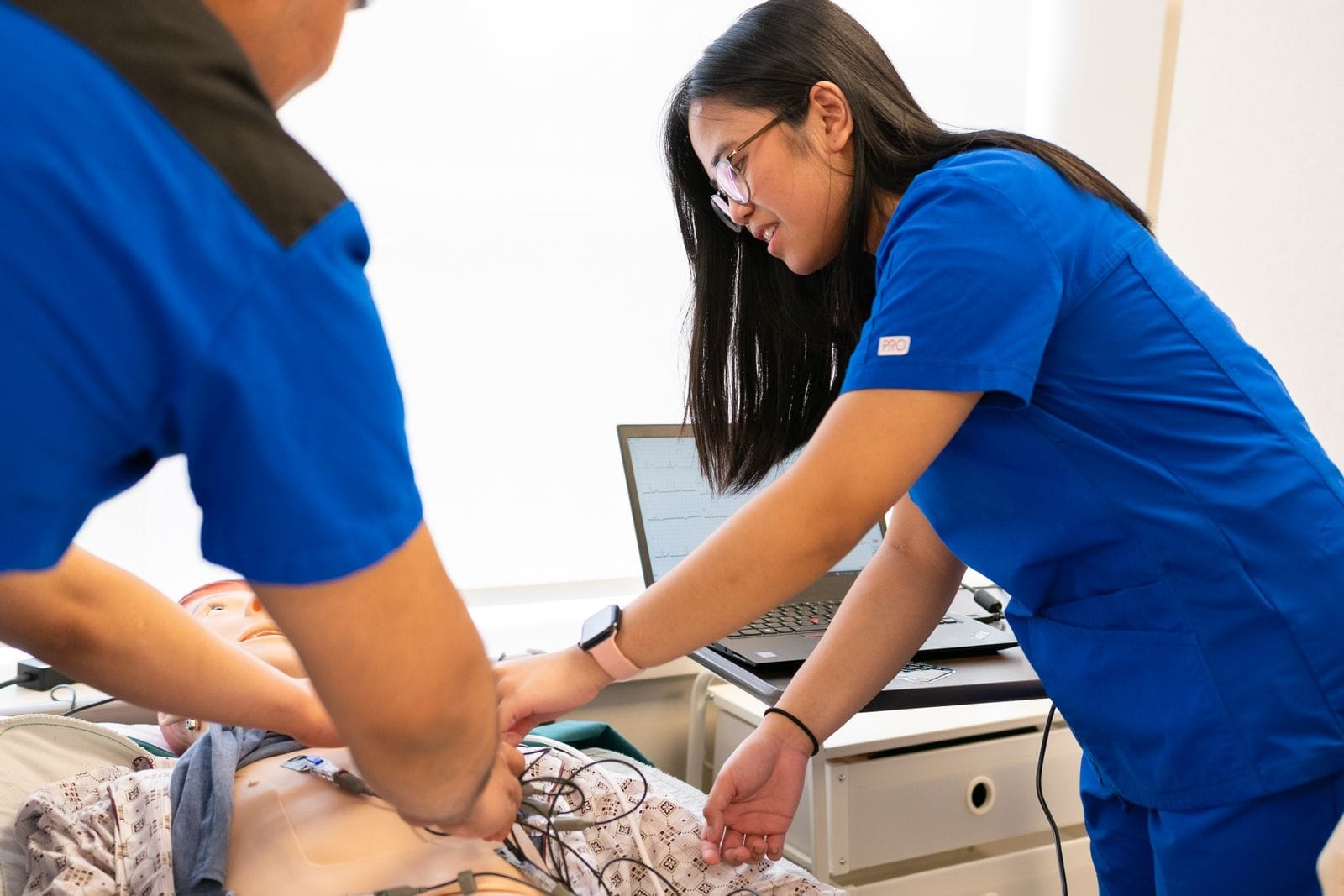
Skills lab versus simulation
The skills lab is task trainers — an arm for IV starts, a torso for catheter practice — and repetition until a technique is safe. Simulation puts the student in a mocked-up patient room with a manikin that deteriorates realistically, so they practise the whole picture: assessment, decision, communication, escalation.
Open practice
Before every graded check-off, the lab opens unstructured hours with the supplies out and an instructor nearby, because the students who practise the awkward parts privately first are the ones who pass calmly.
In and around Porter Falls
Curriculum decisions at Porter run through the departments that meet in Founders Hall and the Applied Arts Building, then to Faculty Senate, then to the Provost in Millwright Hall. The pace is deliberately slow and the review calendar is published.
The practical details
Location: Health Sciences Center, second floor. Use: Scheduled lab sections, plus open practice hours before skills check-offs. Simulation: Manikins that breathe, have a pulse, and respond to what the student does. Anything time-sensitive — an accommodation, a booking, a deadline — is worth confirming directly before you rely on it, because the specifics here can change from term to term.
If you have a question
The office behind this is Office of the Provost (Millwright Hall, Room 300). Call (715) 555–0130 or email provost@uwporterfalls.edu during the fall and spring terms, or sign in to MyPorter to send a message or book a time. If it turns out another office owns the question, they will route it rather than send you back to the start.
Fictional information
UW–Porter Falls is a work of parody. Every office, person, building, phone number and statistic on this page is invented; nothing here describes a real institution or a service you can actually contact.