
Why Porter
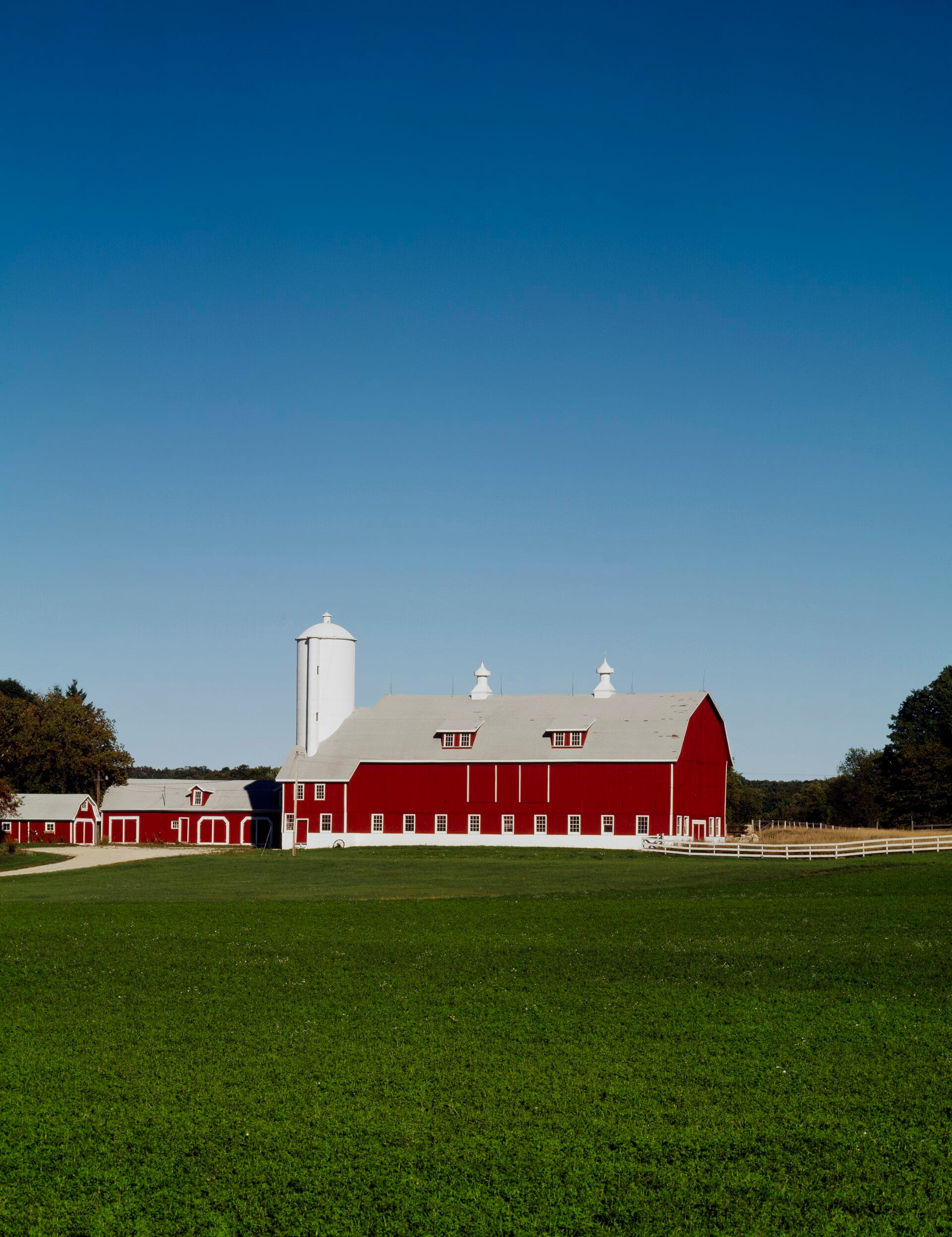
“I grew up in Norvik, about an hour southeast, running gravel roads past barns like the one in that picture. I knew I wanted to teach and I knew I wanted to keep running. Division III let me do both. Nobody here is on an athletic scholarship, so nobody pretends practice matters more than student teaching. My coach actually says that out loud.”
Kari is a junior in Elementary Education and runs for women's cross country. She chose Porter on a recruiting visit when an education professor offered to walk her through the Campus School, the K–8 public school that operates inside the College of Education's building. “Other places told me I'd be in a classroom by junior year. Here a second-grader asked me to tie her shoe on the tour.”
The hands-on part
Education majors at Porter log supervised classroom hours from their first education course. Kari spends Tuesday and Thursday mornings in a Campus School second-grade room, where this semester she plans and teaches two phonics lessons a week under the lead teacher's eye.
- EDUC 310, Literacy Instruction: “We record ourselves teaching, then watch it with the professor. I say ‘okay, friends’ nineteen times in eleven minutes. I'm working on it.”
- Summer: a paid reading-tutor job at the Porter Falls Public Library summer program, eight kids, six weeks.
- Earlier this year: a reading-assessment project in which she tracked eight Campus School students' fluency from September to December and presented the data to their teacher. “Seven of eight improved. The eighth one taught me more.”
- Next fall: a semester of student teaching through the licensure pipeline, likely in the Cedar Bluff School District.
The running part
The women's team is having a strong fall: first of six at the home Porter River Invitational and first of eleven at the Logger Open on October 3 — at Eau Pleine, the Loggers' home course, which Kari says “felt very good, and I'll leave it there.” She was the team's fourth finisher at both. The full results are on the fall schedule page.
There is no meet during Millrace Week. Instead the team works the water stops at the alumni 5K on the Riverfront Trail on Saturday, October 17. “We hand cups to people who ran for Porter in 1976. Some of them are faster than the dads.” The WCAC Championships follow on October 31.
She joined the team as a walk-on her first year and earned a varsity spot as a sophomore. “Division III means the coach will take a chance on you if you show up at 6:30 every day. I showed up.” Her week runs on a written schedule: practice at 6:30 a.m., the Campus School at 8, classes until 3, homework at Halvorsen Library until her roommates drag her out. “A 6K and a room full of second-graders want the same thing from you. Don't go out too fast. Save something for the end.”
A hard semester
“Sophomore spring I had a stress reaction in my left shin and couldn't run for nine weeks. Running was how I handled everything else, so everything else got worse. My grades held up; I didn't.
“The athletic trainer sent me to Counseling Services before I thought to go myself, and I'm grateful. I also leaned on student-athlete academic support to rebuild my schedule around physical therapy. I came back slower, then faster. I teach my second-graders about growth mindset now. I have notes.”
What’s next
She is honest that the schedule will get harder before it gets easier. Student teaching is full-time and unpaid, and she will run her final cross-country season the same fall. “My coach and my education adviser have already met about it, which is a little terrifying. They made a spreadsheet. I have been assured it is color-coded.”
Kari wants to teach second or third grade in a small district “where the teacher also coaches middle school cross country, because somebody has to.” She is vice president of the Porter chapter of Kappa Delta Pi and a member of the Student-Athlete Advisory Committee.
Fictional information
UW–Porter Falls is a work of parody. Kari Osmundson is an invented student: there is no such person, and every quotation, class, grade, job, hometown and anecdote in this profile is fictional. Norvik, Wesconsin, is not a real town, her race placings are made up, and the barn in the photo is a stock image, not her family’s.