
Getting started
What does Career Services do?
Résumé and cover-letter reviews, mock interviews (recorded on request), career coaching, the fall and spring career conferences and smaller industry fairs, an employer relations team with more than 300 regional and national employers, and a job and internship board for students and alumni (Career Services).
When should I first visit?
In your first year. Create a PorterConnect profile, bring even a thin résumé to a drop-in, and walk through a career conference just to see how it works (getting the most from Career Services).
I have no idea what I want to do. Is that too early?
No. Appointments are for choosing a direction as much as applying for a job; coaches help with comparing fields, changing majors and deciding whether graduate school belongs in the plan.
What kinds of appointments are there?
A quick review of one document or question; standard coaching for exploration, search strategy, portfolios or offers; and mock interviews, booked separately so the coach can use a real job description (career coaching appointments).
How do I book, and is there a drop-in?
Book in MyPorter. Drop-in hours run weekday afternoons for quick questions; book a scheduled appointment before a fair or an application deadline.
What should I bring?
Something concrete: a draft résumé, two job listings that interest you, an offer letter, or a list of courses and projects you liked and disliked. Leave with three agreed actions and do the smallest within 48 hours.
PorterConnect and finding work
What is PorterConnect?
The university’s job and internship board, open only to current students and alumni, with roles from employers the university vets. Some event listings still call it PorterCareers; it is the same system.
Where do I find an on-campus job?
On the student jobs board, run by Student Employment, part of Career Services, in Founders Union 160. A campus job can count as career development too (campus jobs as career development).
Do employers interview on campus?
Yes. Between fairs, employers post a role, screen applicants through PorterConnect and interview a shortlist in the career center’s interview rooms; many hold first-round interviews the day after each conference.
Crowded fairs are not for me. Do I have options?
Yes. Ask for a quiet early-entry slot, book a counselor who will make warm introductions for you, or skip the fair and use info sessions, alumni conversations and direct applications with a coach’s help (career fairs and recruiting).
Should I take an unpaid internship?
Most internships in technical and business fields are paid, and on-campus recruiting is free for employers offering paid positions. If an offer is unpaid, talk it through with a coach before you accept.
I am an international student. Can I take an internship?
Usually, with authorization. Check with International Programs before you accept any off-campus role; see the international students FAQ.
Career conferences and fairs
When are the big fairs?
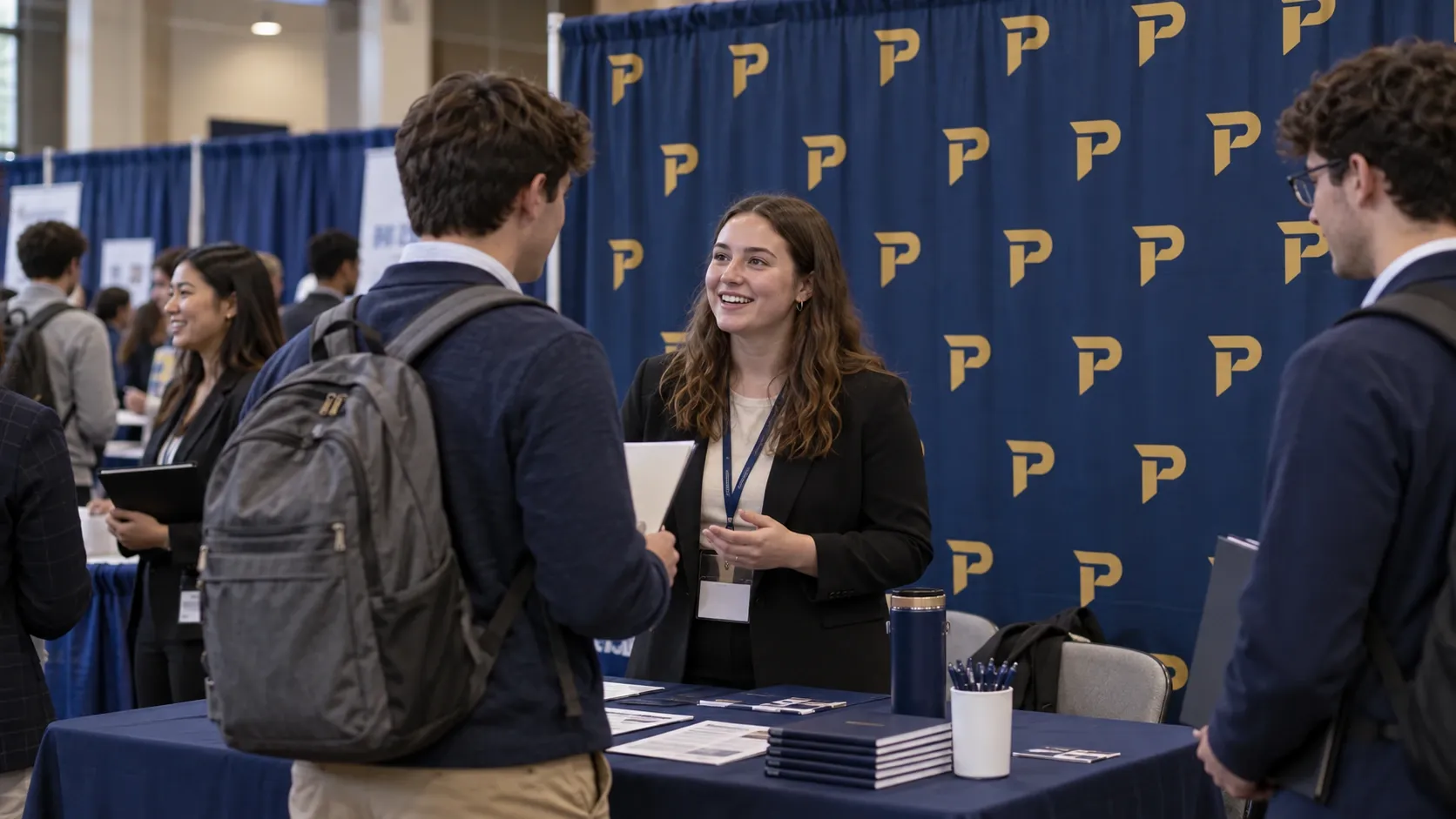
The Fall Career Conference runs two days each September in Ironclad Fieldhouse: day one is manufacturing, engineering technology, construction and skilled trades; day two is technology, design, business, health and human services. The Spring Career Conference is February 3, 2027, weighted toward summer internships and later-hiring employers.
Are there smaller fairs?
Yes, single-industry events through the year, including the Manufacturing Career Conference on October 9, 2026 in Ironclad Fieldhouse. Engineering, construction, packaging and nursing also run department recruiting events.
How do I sign up?
Registration opens in PorterConnect about three weeks before each conference. The employer list, open roles and booth numbers are posted there so you can plan a route. Both conferences are free to students (the Porter Career Conference).
How should I prepare?
Pick a short list of eight or so employers, read what they actually make and hire for, get your résumé reviewed, and rehearse a 30-second introduction: name, year, major, what you are looking for. Warm up on an employer you care less about before your first choice (preparing for a career fair).
What do I do afterward?
Email each recruiter within a day or two, mention the specific conversation, attach your résumé, and still apply to the posting in PorterConnect even if they said “just email me.”
I have nothing to wear. Help?
The Career Closet in Founders Union 158 is free: book a 20-minute fitting, take up to three pieces per visit and keep them. Sizes run adult XS to 4XL, and staff will take a headshot for your PorterConnect profile on the same visit.
Co-ops and internships
Do I have to complete an internship or co-op?
Most programs require an internship, co-op or clinical placement before graduation, listed on each program page; 96 percent of Porter undergraduates complete one.
What is the difference between a co-op and an internship?
A co-op is usually a full-time, paid, major-related term of a semester or a summer, with a zero- or one-credit course carrying faculty-approved learning goals so it appears on your transcript. Internships are often shorter and may be part-time during classes (co-ops and internships).
Will a co-op delay my graduation?
In most plans a co-op term shifts graduation by a semester, not a year, and your adviser maps it with you. Many students convert their co-op into a full-time offer.
When should I start looking?
One to two semesters before you want to start. The search for an internship the summer after sophomore year starts in the fall of sophomore year.
Does a co-op affect my financial aid or eligibility?
It can. Financial aid, visa status and athletic eligibility all interact with a co-op term, so check with the relevant office before you commit.
Outcomes and after graduation
Where do Porter graduates land?
94 percent of graduates report employment or graduate school within six months, 87 percent in a field related to their major, with a median starting salary of $61,400 across all programs (career outcomes).
How are those numbers collected?
Through a first-destination survey at graduation and about six months later, reported by college and program with the knowledge rate — the share of graduates whose outcome is known — published alongside (how Porter measures outcomes).
Why should I fill out the survey?
Because your outcome counts in your program’s numbers, and those numbers are what the next class of students reads.
I am thinking about graduate school. Who helps?
A career coach and the graduate-school adviser, starting junior year. The Graduate & Professional School Fair is October 28 in Commerce Hall; for Porter’s own programs, see the graduate admissions FAQ.
Can you help me evaluate a job offer?
Yes — book an offer conversation for help comparing offers and negotiating salary (evaluating a job offer).
Do I keep access after I graduate?
Yes. Career for Life gives alumni free one-on-one advising by phone or video, résumé and interview help, the alumni job board and the mentor network, with no time limit (career services for alumni).
Fictional information
UW–Porter Falls is a work of parody. Career Services, PorterConnect, these fairs, employers and outcome figures are invented for a fictional university; no recruiter will call, and no salary statistic here describes any real graduate.