
What the provost does
Dr. Bjorn Halvorsen has been provost and vice chancellor for academic affairs since 2016, after eight years chairing Mechanical Engineering. As the university’s chief academic officer he is second in line to the chancellor and acts for her when she is away. The office owns the academic calendar, the catalog, academic policy, faculty appointments and promotion, program approval and review, and the academic share of the budget — about 60 percent of the operating budget once instruction, academic support and research are added up (see Budget & Financial Planning).
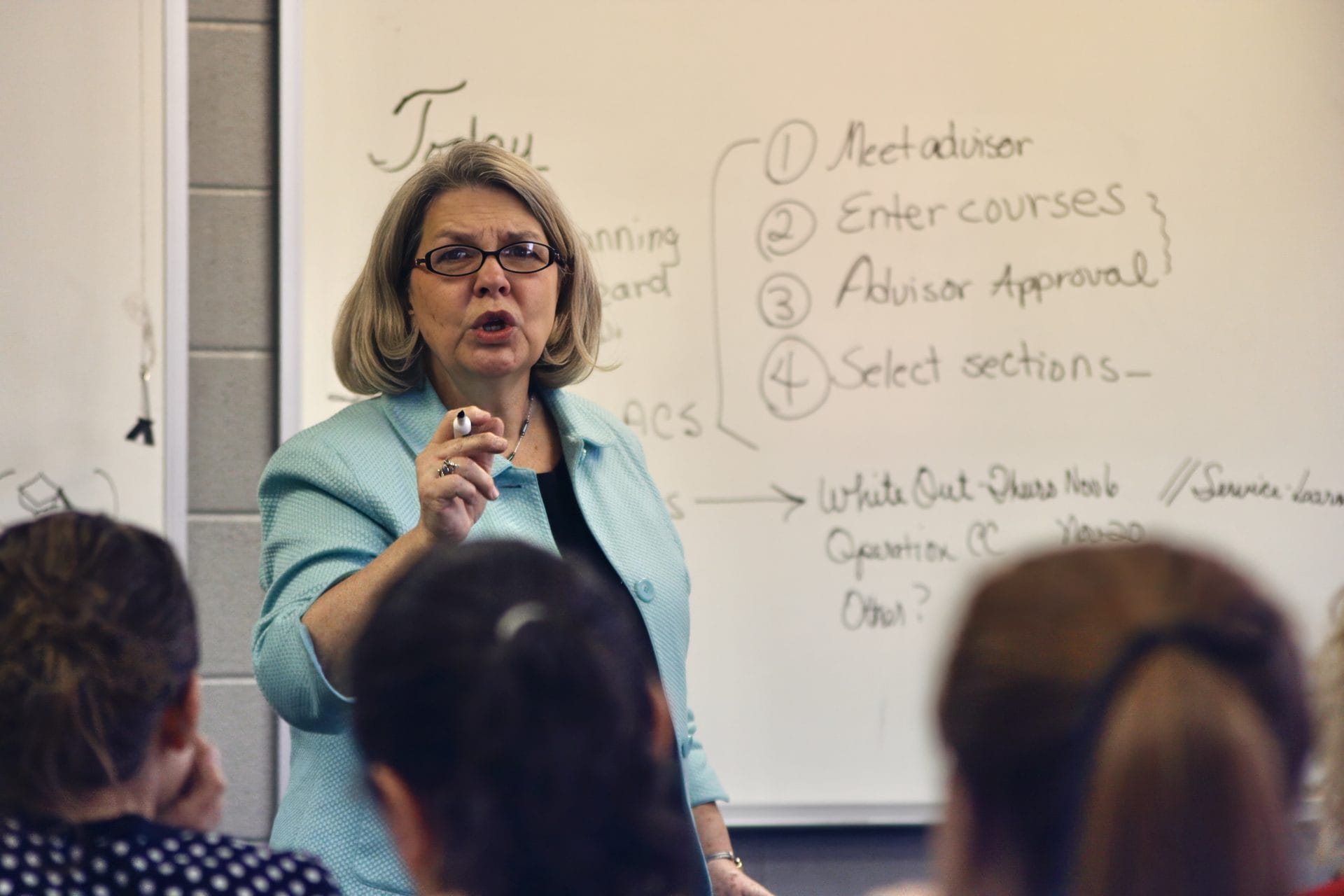
He also teaches one section of Statics & Mechanics of Materials every fall and grades the exams himself. This fall’s section, in Founders Hall, is his last.
The provost transition
Dr. Halvorsen retires at the end of December 2026. Following a national search announced in September (read the announcement), the provost-designate — currently dean of engineering and applied science at a peer polytechnic in another state — starts in early January 2027. The search committee asked that the new provost be introduced on campus in person before being introduced on a web page, so the name will appear here after the December visit.
- November: two-day campus visit; meetings with deans, Faculty Senate leadership and Student Senate.
- December: joint attendance at cabinet; hand-off of open searches, tenure files and the 2027–29 budget requests.
- January–March 2027: listening sessions in each college. Early stated priorities are a clear four-year plan for every student and more paid applied-learning placements.
Nothing in progress stops during the change: tenure and promotion files, program reviews and searches keep their published timelines.
Units that report to the provost
| Unit | Leader |
|---|---|
| College of Engineering & Technology | Dr. Karen Bergstrom, dean |
| College of Computing & Information Sciences | Dr. Nancy Jorgensen, dean |
| College of Business | Dr. Elizabeth Pratt, dean |
| College of Health Sciences | Dr. Laura Vance, dean |
| College of Education | Dr. Rebecca Dunmore, dean |
| College of Arts, Design & Communication | Dr. Melissa Jacoby, dean |
| College of Applied & Technical Studies | Dr. Sandra Petrov, dean |
| College of Science & Mathematics | Dr. Priya Adeyemi, dean |
| Graduate School | Dr. Ruth Oyelaran, dean |
| Halvorsen Library | Dr. Peder Moen, dean of libraries |
| Research & Sponsored Programs | Dr. Teodora Brekke, vice provost for research |
| Faculty Affairs | Dr. Harriet Engebretson, associate provost |
| Academic Programs & Assessment | Dr. Samuel Odegaard, associate provost |
| International Education & Study Abroad | Mikel Stenberg, director |
| Strategic Planning & Institutional Effectiveness | Founders Hall 310 |
Advising and the early-alert system (how it works) are run jointly by the colleges and Academic Programs & Assessment.
Academic program review
Every degree program is reviewed on a seven-year cycle; accredited programs time theirs to line up with the accreditor’s visit so faculty write one self-study, not two. A review takes one academic year:
- September: the program receives a data packet from Institutional Research — enrollment, retention, graduation, credit hours, career outcomes and cost per credit.
- December: self-study due to the dean.
- February–March: an external reviewer from another university visits for a day and a half.
- April: Faculty Senate’s Program Review Committee recommends one of four outcomes: continue; continue with recommendations; continue with a two-year follow-up; or refer for restructuring.
- May: the provost issues a written response that the program can cite in budget requests.
Programs under review in 2026–27: Packaging Technology, Apparel Design, Hospitality Management, Aviation Management, Criminal Justice, Technical Communication and Rehabilitation Services.
Faculty affairs
The associate provost for faculty affairs handles hiring, contracts, tenure and promotion, sabbaticals and faculty grievances. Key dates this year:
- Tenure-track searches: 14 authorized for 2026–27; position descriptions to the provost by October 23.
- Tenure and promotion: dossiers were due September 15; college committees report by November 20; the provost’s decisions go out by March 1; the Board of Regents acts in June.
- Sabbaticals for 2027–28: applications due November 6; up to nine are funded.
- Post-tenure review: every five years, under the published process.
Teaching support, new-faculty orientation and the summer course-redesign stipends run through faculty development. Questions about instructional staff appointments are answered on the non-tenure-track faculty page.
Fictional information
UW–Porter Falls is a work of parody. The provost, the provost-designate, the associate provosts, the program-review schedule and the tenure dates are all invented; no real faculty member’s career depends on anything here.