
Equipment and capabilities
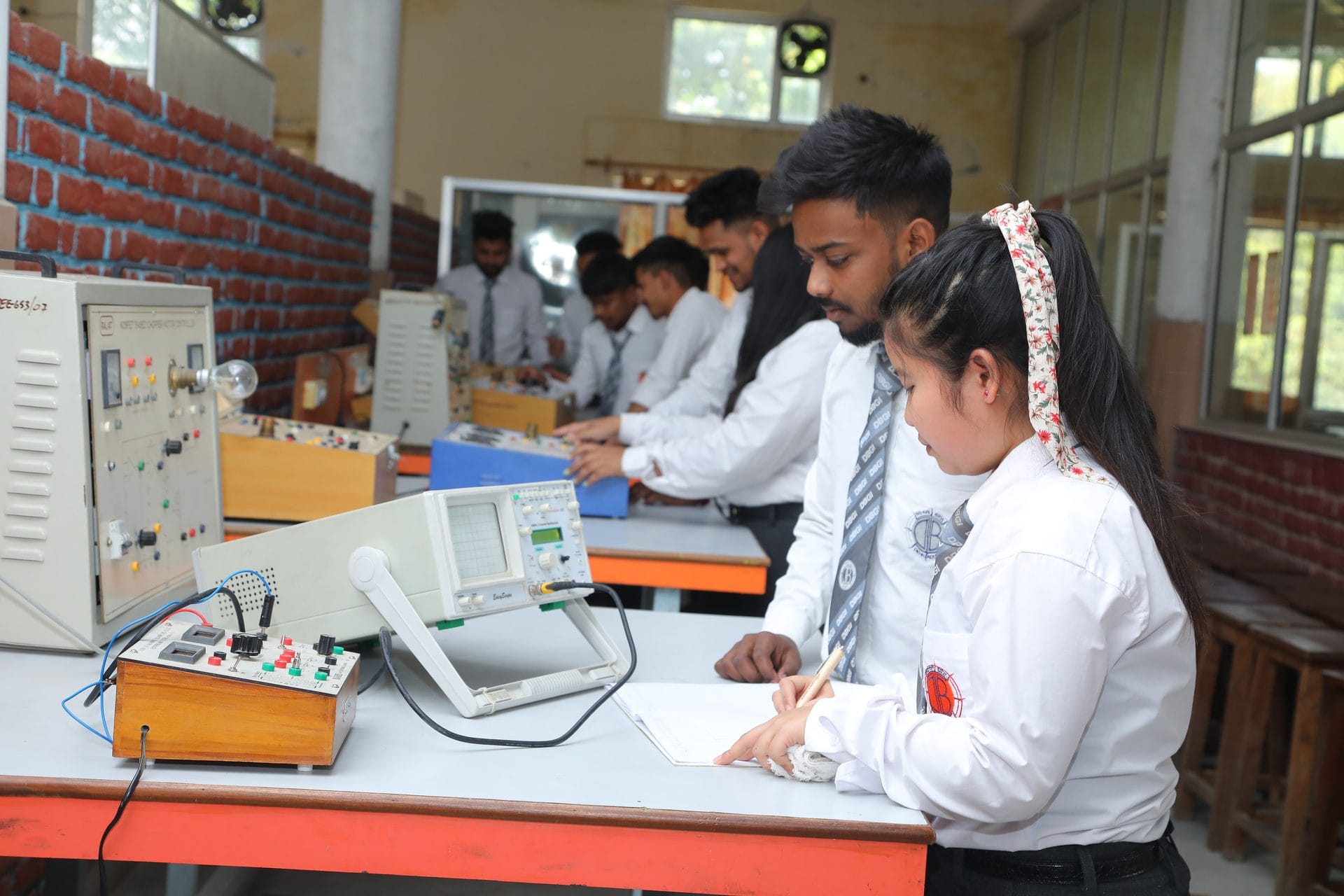
The Prototyping Lab (Founders Hall 160–170, 8,000 sq. ft.) is the Makerspace’s big sister — tighter tolerances, production-grade materials, and full-time engineering staff. 5-Axis CNC (Haas UMC-750SS, 30K RPM, 40-tool ATC) — simultaneous 5-axis, probing, ±0.0002” repeatability. Metal 3-D Printing (EOS M 290, DMLS, 250×250×325 mm) — AlSi10Mg, Ti6Al4V, Inconel 718, 316L stainless; post-process: HIP, heat treat, CNC finish. Injection Molding (Arburg 320T, 2-cavity, scientific molding) — prototype tooling (aluminum, 2-week lead), 10K+ shot validation runs. Precision Measurement: Zeiss CMM (0.5 µm), Keyence laser micrometer, surface roughness tester, CT scanner (Nikon XT H 225, 5 µm voxel). Electronics Assembly: SMT line (Mycronic pick-and-place, 40K CPH, 0201 capable), vapor-phase reflow, AOI, X-ray, flying-probe test. Composites: autoclave (3’x6’, 250 psi, 350°F), filament winder, prepreg freezer, clean layup room (ISO 8). Software stack: Fusion 360, Mastercam, nTopology, Ansys, Altium, custom MES for traceability.
How it works: project intake to delivery
1. Intake (Week 0): Submit the Project Brief (problem, requirements, timeline, budget, IP ownership). Lab staff triage within 2 business days — accept, refer to Makerspace, or request clarification. 2. Scoping (Week 1–2): Assigned Prototyping Engineer + 2–3 Prototyping Fellows (students). Produce: BOM, CAD model, manufacturing plan, risk register, quote. Client signs off. 3. Build Sprints (Weeks 3–10): Two-week sprints, sprint review with client. Lab manages procurement (P-card, 48-hr turnaround for standard items). 4. Validation (Week 11): Dimensional inspection, functional test, environmental test (if spec’d), documentation package (drawings, BOM, process sheets, test reports, DFM feedback). 5. Handoff (Week 12): Client receives parts, digital package, and a Transition Memo (scaling recommendations, vendor shortlist, cost-at-volume model). Typical project: 12 weeks, $8K–$45K (university subsidizes 60% for student/nonprofit projects).
Student roles: prototyping fellows
Prototyping Fellows (12 per semester, paid Tier 3 + tuition remission for 3 credits) are the lab’s workforce. Selection: application (portfolio + faculty reference) → practical exam (CNC setup, SMT rework, measurement) → interview. Training (first 3 weeks): Lab SOPs, GD&T, statistical process control, quality documentation, client communication. Specialization tracks (choose one per semester): Precision Machining, Additive Manufacturing (Metal), Injection Molding & Tooling, Electronics Assembly & Test, Composites, Metrology & Validation. Career pipeline: 78% of Fellows convert to full-time roles at partner companies (med-tech, aerospace, defense, consumer hardware) or launch ventures via the Student Venture Incubator. The Fellow Alumni Network (180+ since 2015) runs a Slack, quarterly mixers, and a referral board.
Industry and community partnerships
Anchor Partners (annual membership $50K, 4 projects/year priority queue, IP license option): Porter Valley Bank (fintech hardware), MedTech Collaborative (3 regional device companies), DNR Porter District (field instrumentation). Project Partners (per-project, cost-sharing): Plastics Engineering program (mold trials), Nursing simulation (custom task trainers), Ironclad Robotics (Featherweight components), Riverkeepers (water-quality sensor housings). Community Access: Nonprofits and Porter Falls small businesses (<50 employees) get 50% subsidy + student-team match via Community Partnerships Office. The lab’s Open Hardware License (default for student-led projects) allows commercial use with attribution.
Notable projects
Millrace Fish Passage Sensor Suite (2024, Environmental Science + Lab): 12 submerged nodes (pressure, temp, accelerometer, LoRaWAN), 8-month deployment, survived winter ice — data published in JAWRA. Adaptive Prosthetic Socket (2023, Nursing + Incubator): 3-D-printed lattice (nTopology), pressure-mapping insole, FDA Class I clearance pathway — startup Lumen Prosthetics raised $1.2M seed. Portable Cyanotoxin Analyzer (2022, DNR + Lab): microfluidic cartridge + handheld fluorimeter, 15-min detection, field-tested on Lake City bloom — adopted by 3 state agencies. Ironclad Featherweight River Rat Undercutter (annual): lab machines the titanium chassis, wire-EDMs the tool steel blade, heat-treats & CMMs — 2025 version placed top-8 at NHRL.
Funding and access
University funding (60% of budget): student fees, research overhead return, provost’s innovation fund. Partner revenue (30%): anchor memberships, project fees. Grants (10%): NSF MRI, Wesconsin Economic Development Corp, DOE SBIR pass-through. Student access: Incubator teams get 20 hrs/semester free; Micro-Grant recipients get 10 hrs; Makerspace Red-badge holders get 5 hrs (orientation required). Course support: ME 4900 Capstone, Plastics 4500 Mold Design, EE 4800 Hardware Bring-Up have dedicated lab blocks. Propose a project: Project Brief form (portal login) or email prototyping@uwporterfalls.edu.
Fictional information
UW–Porter Falls is a work of parody. The lab, equipment, projects, and partnerships described here are invented for this fictional university. No real facilities or programs are depicted.