
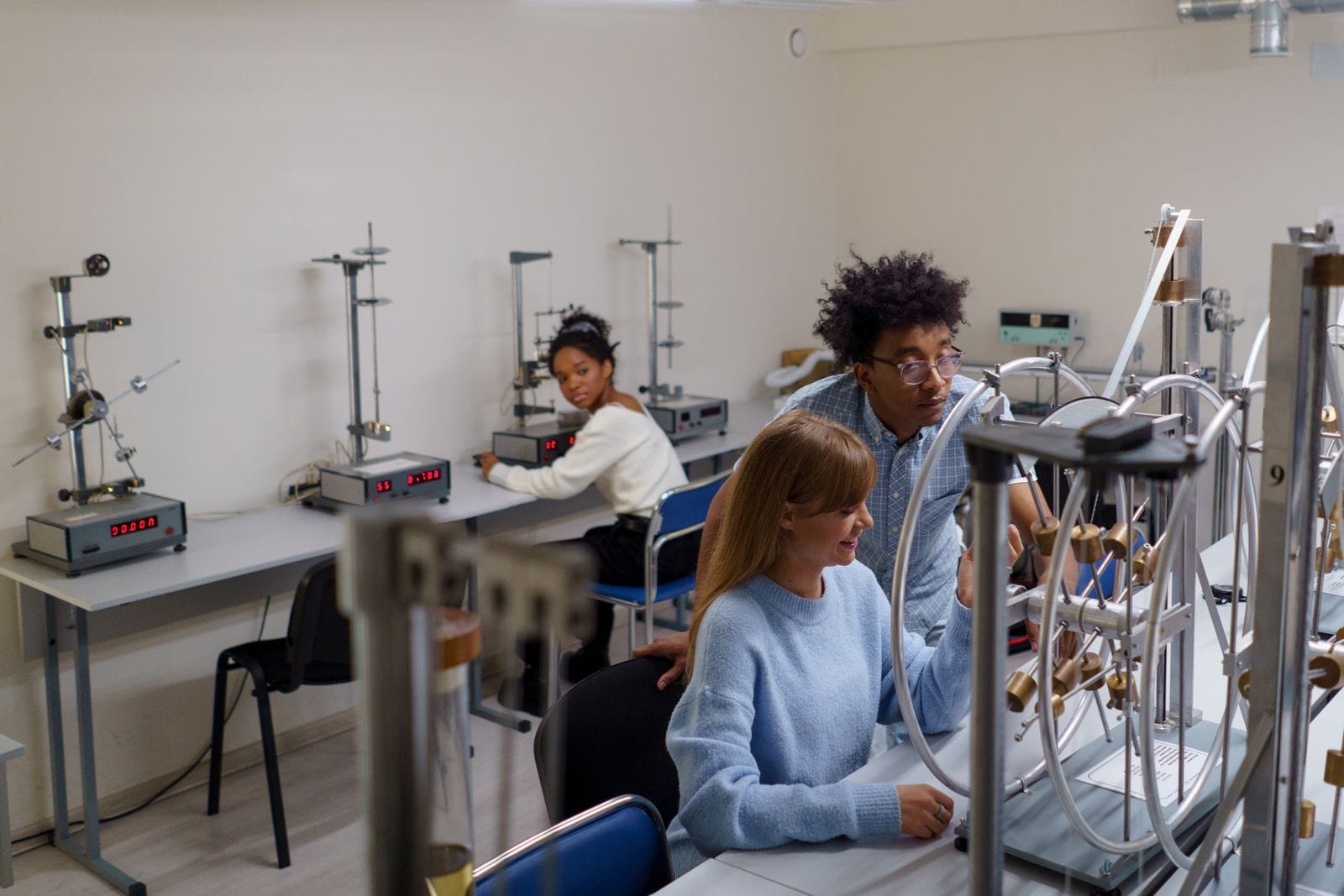
What EH&S covers
Environmental Health & Safety (EH&S) keeps Porter’s labs, shops, studios and workplaces within safety and environmental rules and helps people work safely in them. It reports to the vice chancellor for finance and operations and works daily with Facilities and Campus Safety. As a public employer, Porter follows the state’s public-employee safety program, which adopts the federal workplace safety standards; EH&S is where those rules turn into training and inspections.
| Name | Title |
|---|---|
| Curtis Hagen | Director, Environmental Health & Safety |
| Dr. Lise Andvik | Chemical Hygiene Officer |
| Marco Dufresne | Fire & Life Safety Specialist |
| Tamsin Odell | Occupational Safety & Training Coordinator |
| Brent Sjoquist | Hazardous Materials Technician |
Lab and shop safety
No one works independently in a lab or shop with chemical, biological or physical hazards without training. The general online module and the room-specific walkthrough are described on laboratory safety training; the rules for each kind of space are on laboratory and studio safety. Every lab using hazardous chemicals operates under the chemical hygiene plan, and the chemical hygiene officer inspects each one at least once a year. Fume hoods are certified every twelve months; a hood with an expired sticker is tagged out of service.
Work with biological agents requires biosafety training; work with radioactive sources or X-ray equipment starts with radiation safety basics. Field trips to the Porter River and University Farm follow the field research safety plan.
Chemical and hazardous waste
- Nothing hazardous goes down a drain or into regular trash.
- Collect waste in a compatible, closed, labeled container at or near where it was produced. Labels must say “Hazardous Waste” and list contents in words, not formulas.
- Request a pickup in MyPorter by noon Monday or noon Wednesday; EH&S collects on Tuesdays and Thursdays.
- Containers may not sit in a lab more than 90 days after they are full.
- Last year EH&S shipped 11.2 tons of hazardous waste for licensed disposal and redistributed 640 unopened chemical containers to other labs through the surplus exchange.
Batteries, bulbs and electronics go through the universal-waste program on waste and recycling. A spill too big for the lab’s spill kit, or any spill with an injury or vapor, is a call to 911 and Campus Safety, not a cleanup.
Fire safety
The fire and life safety specialist inspects every academic building once a year and every residence hall each semester, with the Porter Falls Fire Department joining the residence-hall inspections in October. Residence halls run two evacuation drills per semester; academic buildings run one per year. Room inspections during winter and spring breaks look for candles, space heaters, extension cords chained together and covered smoke detectors — still the top four findings. Fire statistics are published each year in the annual security and fire safety report. Evacuation steps are on emergency procedures.
Required safety training
| Training | Who | How often |
|---|---|---|
| Laboratory safety | Anyone in a lab with hazards | Annually |
| Hazardous waste generator | Lab staff, shop leads, art studio techs | Annually |
| Bloodborne pathogens | Nursing, athletic training, custodial, health services | Annually |
| Hearing conservation | Machine shop, welding, grounds, central plant | Annually, with a hearing test |
| Respirator fit test | Anyone assigned a respirator | Annually |
| Lockout/tagout | Trades, shop instructors, lab technicians | Annually |
| Forklift and aerial lift | Facilities, theatre, receiving | Every three years, with a practical |
| Fire extinguisher (hands-on) | Building safety wardens, residence hall staff | Every two years |
Training records live in MyPorter; supervisors see their team’s status. Workplace injuries are reported the same day under workplace safety and workers’ compensation, and near-misses should be reported too.
Fictional information
UW–Porter Falls is a work of parody. This safety office, its staff, its inspection schedules and its waste tonnage are invented. Follow your own institution’s safety rules and real emergency procedures, not these.